

Wrong-Way Crashes and Fatalities Drop Dramatically Under New CT Laws

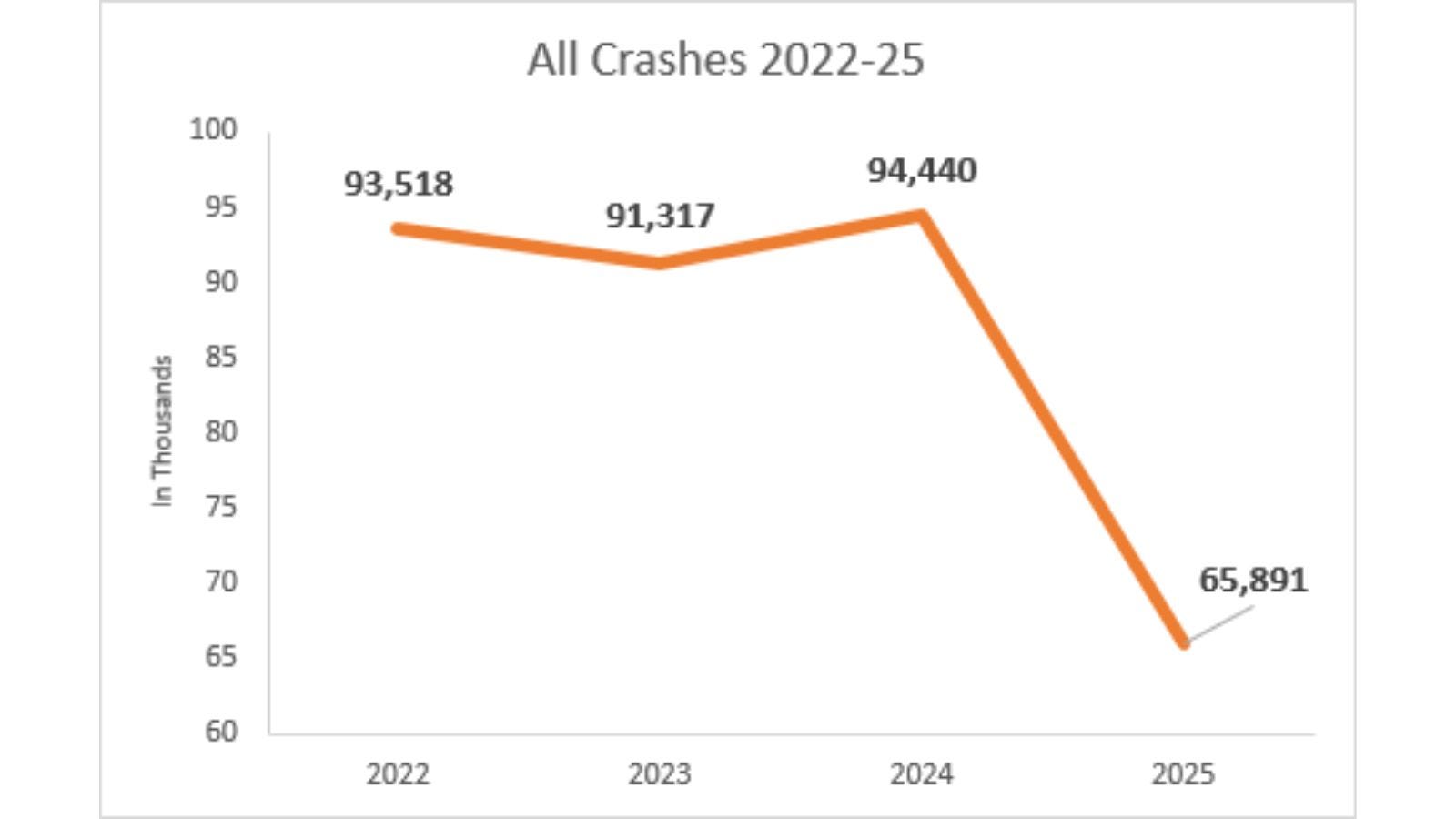
The latest data from the Connecticut Crash Data Repository at UConn shows significant drops so far this year in all types of automobile accidents compared to 2024, and the data indicates that 2025 is going to end up being the safest year on Connecticut’s roadways since at least 2022.
From January 1 to November 30, 2025, all automobile crashes in Connecticut are down 30%, fatal crashes are down 46%, work zone crashes are down 34%, wrong-way driver crashes are down 29%, and pedestrian-involved crashes are down 20% compared to the same time period in 2024. All five categories of crashes are also at their lowest points since at least 2022.
The data can be found here: https://www.ctcrash.uconn.edu/dashboards/CEA.html.
The drops in overall crashes, fatal collisions, wrong-way driving, work zone incidents, and pedestrian accidents is likely the result of various legislative initiatives passed by Democrats and the General Assembly over the past few years.
Just this year, the General Assembly passed two important transportation initiatives designed to reduce traffic deaths: Public Act 25-80, which increased the penalties for people driving over 100 mph, and Public Act 25-65, which increased fines for drivers who don’t yield to pedestrians and also required helmets for all motorcycle drivers under the age of 21.
In 2023, legislative Democrats voted over Republican objections to allow cities and towns in Connecticut to install their own automated red light cameras and speeding cameras. Speed cameras are now being used in Beacon Falls, Greenwich, Marlborough, Middletown, Milford, New Haven, Stratford, Washington, and Wethersfield, with applications pending in Fairfield, Hamden and Stamford. The automatic cameras take a picture of the vehicle’s license plate, and fines ranging from $50 to $75 are mailed to the owner.
In 2022, the Democrat-controlled State Bond Commission approved $20 million in funding for wrong-way driving mitigation measures on highways and at entrance/exit ramps. 85% of wrong-way drivers turned around immediately when alerted by the new system, which is usually installed on highway exit ramps. Unfortunately, nearly all wrong-way highway crashes – 93% – involve alcohol or drugs.
In 2021, the General Assembly voted for Public Act 21-2, the work zone speed camera pilot program, which allowed the DOT to establish a two-year pilot program to operate speed cameras at 15 highway work zones across the state. Motorists travelling more than 15 mph above the posted speed limit in the work zones get a “notice of liability” sent to them in the mail. In its first year of operation, nearly 25,000 drivers received written warnings, and more than 700 of them got fined at least $75.
By Lawrence Cook